Hey there! As a supplier of motor assembly machines, I've seen firsthand the wide range of models available in the market, each with its own unique features and capabilities. In this blog, I'm going to break down the differences between different models of motor assembly machines, so you can make an informed decision when it comes to choosing the right one for your business.
Manual vs. Semi - Automatic vs. Fully Automatic Machines
Let's start with the most fundamental classification: manual, semi - automatic, and fully automatic motor assembly machines.
Manual Machines
Manual motor assembly machines are the most basic type. They require a lot of human intervention. Operators need to perform tasks like placing components, tightening screws, and aligning parts by hand. These machines are relatively inexpensive, making them a good choice for small - scale operations or when you're just starting out. They're also great for prototyping because you can make quick adjustments. However, they're not very efficient for large - volume production. The production speed is limited by the operator's skill and speed, and there's a higher chance of human error.
Semi - Automatic Machines
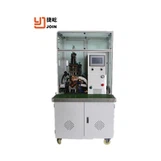
Semi - automatic machines are a step up from manual ones. They combine some automated processes with human input. For example, the machine might automatically feed components to a specific position, but the operator still needs to perform some assembly tasks, like inserting a rotor into a stator. These machines are more efficient than manual ones and can handle a higher production volume. They're also more flexible than fully automatic machines because you can still make some on - the - fly adjustments. But they do require a trained operator to run them properly.
Fully Automatic Machines
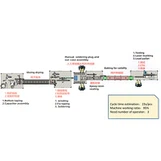
Fully automatic motor assembly machines are the top - of - the - line option. They can perform the entire motor assembly process without any human intervention, from component feeding to final testing. These machines are incredibly efficient and can produce a large number of motors in a short period of time. They also offer high precision and consistency, which is crucial for industries that require high - quality motors. However, they're very expensive to purchase and maintain. They're best suited for large - scale production where the high upfront cost can be justified by the long - term savings in labor and increased productivity.
Different Assembly Processes
Another factor that differentiates motor assembly machines is the assembly processes they support.
Stator Winding Machines
Stator winding is a critical step in motor assembly. There are different types of stator winding machines, such as single - phase and three - phase winding machines. Single - phase winding machines are used for motors that operate on single - phase power, while three - phase winding machines are for three - phase motors. These machines can vary in terms of the winding pattern they can create, such as concentric winding or lap winding. The choice of winding machine depends on the type of motor you're producing and the specific requirements of the stator winding.
Rotor Assembly Machines
Rotor assembly machines are used to assemble the rotor of the motor. This can involve tasks like inserting magnets into the rotor core or balancing the rotor. Some rotor assembly machines are designed for permanent magnet rotors, while others are for induction rotors. The key difference between these machines lies in the way they handle the components. For example, permanent magnet rotor assembly machines need to handle the strong magnetic forces between the magnets.
Final Assembly Machines
Final assembly machines bring all the components together to create a complete motor. These machines can perform tasks like housing assembly, shaft insertion, and end - cap installation. Some final assembly machines are designed to work with specific types of motors, such as DC motors or AC motors. They can also vary in terms of the level of automation. Some may have a simple conveyor system to move the components, while others may have a complex robotic system to perform the assembly tasks.
Precision and Quality Control
Precision and quality control are crucial in motor assembly. Different models of motor assembly machines offer different levels of precision and quality control features.
High - Precision Machines
High - precision motor assembly machines are designed to ensure that the components are assembled with very high accuracy. These machines use advanced sensors and control systems to monitor and adjust the assembly process in real - time. For example, they can detect if a component is not properly aligned and make the necessary adjustments. These machines are ideal for industries that require high - quality motors, such as the automotive and aerospace industries.
Quality Control Systems
Many motor assembly machines come with built - in quality control systems. These systems can perform tests like electrical testing, vibration testing, and temperature testing. Some machines can even perform 100% inspection of every motor produced. The quality control systems can vary in terms of their complexity. Some may just provide basic pass/fail results, while others can provide detailed reports on the performance of the motor.
Specialized Machines
In addition to the standard motor assembly machines, there are also specialized machines for specific applications.
Miniature Motor Assembly Machines
Miniature motor assembly machines are designed to assemble small - sized motors, such as those used in smartphones, drones, and medical devices. These machines need to be very precise because of the small size of the components. They also need to be able to handle delicate parts without damaging them.
High - Voltage Motor Assembly Machines
High - voltage motor assembly machines are used for motors that operate at high voltages, such as those used in industrial applications. These machines need to meet strict safety standards and have special insulation and grounding features. They also need to be able to handle the high - voltage components safely.
The Role of Servo Press Machine
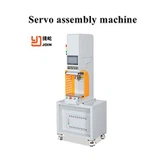
A Servo Press Machine is an important part of many motor assembly processes. It can be used for tasks like pressing bearings into the motor housing or assembling other components with precise force control. Servo press machines offer several advantages, such as high precision, repeatability, and the ability to adjust the pressing force according to the requirements of the assembly process. They can be integrated into both semi - automatic and fully automatic motor assembly lines, enhancing the overall efficiency and quality of the assembly process.


Conclusion
So, as you can see, there are many differences between different models of motor assembly machines. When choosing a motor assembly machine for your business, you need to consider factors like the scale of your production, the type of motors you're producing, the level of precision and quality control you need, and your budget.
If you're in the market for a motor assembly machine and want to learn more about our products, feel free to reach out to us. We can provide you with detailed information about our different models and help you find the one that's right for your business. Whether you're a small - scale operation looking for a cost - effective solution or a large - scale manufacturer in need of high - end automation, we've got you covered.
References
- "Motor Manufacturing Technology" by various industry experts
- Technical manuals of different motor assembly machine manufacturers