What is the tension control of a coil winding machine?
As a well - established supplier of coil winding machines, I understand that one of the most crucial aspects in the operation of these machines is tension control. In the following, I will dive into the concept, significance, systems, influencing factors, and optimization of tension control in a coil winding machine.
Understanding Tension Control in Coil Winding Machines
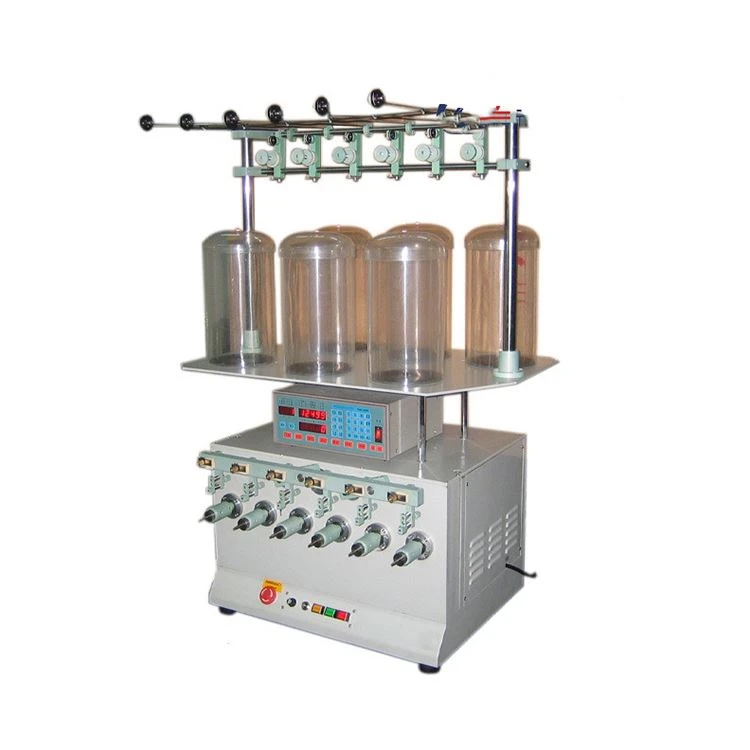
Tension control in a coil winding machine refers to the process of maintaining a consistent force or tension on the wire during the winding process. When the wire is wound around a core (such as a magnetic core or an air - core), the tension needs to be managed precisely. This ensures that the wire is wound evenly and compactly, without being too loose to cause slippage or too tight to break.
Imagine a simple scenario where you are trying to wrap thread around a spool. If you pull the thread too loosely, it will pile up in a messy way, and the spool will not be well - organized. On the other hand, if you pull it too tightly, the thread may snap. The same principle applies to coil winding machines, but on a much larger and more precise scale.

The Significance of Tension Control
- Quality of Coils: Consistent tension control is essential for producing high - quality coils. When the tension is uniform throughout the winding process, the coils have a more regular shape and better electrical properties. For example, in electromagnetic coils, uniform tension can lead to more consistent magnetic fields, which are crucial for their performance in various applications such as transformers and inductors.
- Preventing Wire Breakage: Controlling the tension within an appropriate range helps to prevent wire breakage. If the tension is too high, the wire may exceed its tensile strength and snap, leading to production delays and increased costs due to material waste and machine downtime.
- Winding Efficiency: Proper tension control can also improve the winding efficiency. A well - tensioned wire can be wound more quickly and accurately, increasing the overall production speed of the coil winding machine.
Tension Control Systems in Coil Winding Machines
- Mechanical Tensioning Systems: These are the most basic types of tension control systems. They typically use components such as brakes, clutches, and springs to apply and regulate the tension on the wire. For example, a simple friction brake can be used to provide a constant resistance force, which in turn controls the tension of the wire as it is pulled off the spool. Mechanical systems are relatively simple and cost - effective, but they may have limitations in terms of precise control, especially for high - speed or complex winding applications.
- Pneumatic Tensioning Systems: Pneumatic systems use compressed air to control the tension. A pneumatic brake or clutch can be adjusted by changing the air pressure, allowing for more precise and responsive tension control compared to mechanical systems. These systems are often used in applications where more immediate adjustments to tension are required, such as in semi - automatic winding processes. You can learn more about Semi Auto Winding Machine and how pneumatic tensioning might be applied in such machines on our website.
- Electronic Tensioning Systems: Electronic systems are the most advanced type of tension control systems. They use sensors to measure the tension of the wire in real - time and then use a control algorithm to adjust the tensioning device accordingly. This allows for extremely precise and dynamic tension control, even in high - speed winding operations. Electronic systems can adapt to changes in winding speed, wire diameter, and other factors to maintain optimal tension throughout the process.
Factors Affecting Tension Control
- Wire Properties: Different types of wires have different physical properties, such as diameter, material, and flexibility. For example, a thinner wire may require a lower tension to prevent breakage, while a stiffer wire may need a higher tension to be wound neatly. The type of insulation on the wire can also affect the tension requirements. A thick or hard - coated insulation may require more careful tension control to prevent damage.
- Winding Speed: As the winding speed increases, the tension on the wire can change significantly. At higher speeds, there is more inertia and friction involved, which can lead to increased tension. Therefore, the tension control system needs to be able to adjust the tension in real - time to compensate for these speed - related changes.
- Coil Design: The design of the coil, including its shape, size, and the number of turns, also affects the tension control. For example, a coil with a small diameter core may require higher tension to ensure that the wire is wound tightly around the core, while a large - diameter coil may need a more relaxed tension to avoid over - stressing the wire.
Optimizing Tension Control in Coil Winding Machines
- Proper Calibration: Regular calibration of the tension control system is essential to ensure its accuracy. This involves checking and adjusting the tension settings according to the specifications of the wire and the coil design. Calibration may also involve testing the system under different operating conditions to ensure that it can maintain the desired tension consistently.
- Operator Training: Well - trained operators are crucial for achieving optimal tension control. Operators should understand the principles of tension control, how to operate the tension control system of the machine, and how to identify and troubleshoot tension - related problems. They should also be able to make minor adjustments to the tension settings based on the actual winding conditions.
- Monitoring and Feedback: Implementing a monitoring system that can provide real - time feedback on the tension of the wire is essential. This allows operators to detect any deviations from the desired tension quickly and take corrective actions. Electronic tension control systems often come with built - in monitoring and feedback capabilities, which can greatly improve the efficiency and quality of the winding process.
Applications of Coil Winding Machines with Precise Tension Control
- Air Coil Winding: In the production of Air Coil Winding Machine, precise tension control is vital. Air coils are used in a variety of applications, such as radio frequency (RF) circuits and antennas. The uniform tension ensures that the coils have consistent inductance and other electrical characteristics, which are critical for the proper functioning of these devices.
- Solenoid Coil Winding: Solenoid coils are used in many industrial and automotive applications, such as valves and actuators. Solenoid Coil Winding Machine with accurate tension control can produce coils with reliable magnetic properties. The consistent tension helps to ensure that the solenoid operates smoothly and efficiently.
In conclusion, tension control is a fundamental aspect of coil winding machines. It plays a central role in determining the quality, efficiency, and cost - effectiveness of the coil production process. As a coil winding machine supplier, we are committed to providing machines with state - of - the - art tension control systems to meet the diverse needs of our customers.
If you are interested in our coil winding machines and would like to discuss your specific requirements or have any questions about tension control or other features, we invite you to contact us. Our team of experts is ready to offer professional advice and support to help you make the best choices for your coil production needs.
References
- Groover, M. P. (2010). Automation, Production Systems, and Computer - Integrated Manufacturing. Pearson.
- Budynas, R. G., & Nisbett, J. K. (2011). Shigley's Mechanical Engineering Design. McGraw - Hill.