

Hey there! As a supplier of winding machine tensioners, I've seen firsthand how crucial it is to ensure uniform tension across the winding. In this blog post, I'm gonna share with you how our winding machine tensioners achieve this, and why it's so important for your winding operations.
Why Uniform Tension Matters
Before we dive into how our tensioners work, let's talk about why uniform tension is such a big deal. When you're winding materials like wires, cables, or fibers, uneven tension can lead to a whole bunch of problems. For starters, it can cause the winding to be inconsistent, with some parts being tighter or looser than others. This can affect the performance and quality of the final product.
Imagine you're winding a coil for an electrical device. If the tension isn't uniform, the coil might not function properly, leading to issues like overheating or short circuits. In the case of fiber optic cables, uneven tension can cause signal loss or degradation, which is a major no - no in the world of high - speed data transmission.
Uniform tension also helps to prevent breakage during the winding process. If the tension is too high in some areas, the material is more likely to snap, which can be a real headache in terms of wasted materials and production downtime. On the other hand, if the tension is too low, the winding can become loose and messy, making it difficult to handle and package.
How Our Tensioners Ensure Uniform Tension
We offer a range of tensioners, including Magnetic Tensioner, Servo Tensioner, and Mechanical Tensioner, each designed to provide precise and uniform tension control.
Magnetic Tensioners
Magnetic tensioners use magnetic fields to control the tension of the winding material. The basic principle behind these tensioners is that a magnetic force is applied to a brake or clutch mechanism, which in turn regulates the resistance on the material being wound.
One of the key advantages of magnetic tensioners is their ability to provide smooth and consistent tension. The magnetic force can be easily adjusted, allowing you to fine - tune the tension according to the specific requirements of your winding process. This means that you can maintain a uniform tension throughout the winding, regardless of the speed or diameter of the spool.
Our magnetic tensioners are also highly responsive. They can quickly adapt to changes in the winding conditions, such as variations in the material thickness or the speed of the winding machine. This ensures that the tension remains stable and uniform, even in dynamic winding environments.
Servo Tensioners
Servo tensioners are another great option for achieving uniform tension. These tensioners use a servo motor to control the tension, which offers a high level of precision and flexibility.
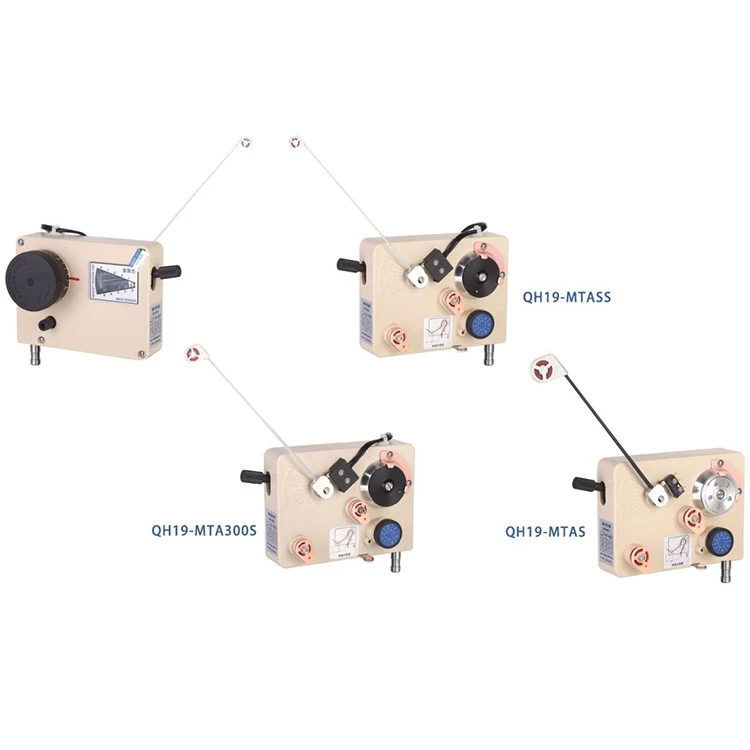

The servo motor is connected to a control system that continuously monitors the tension of the winding material. If the tension deviates from the set value, the servo motor adjusts the force applied to the material to bring the tension back to the desired level. This real - time feedback mechanism is what makes servo tensioners so effective at maintaining uniform tension.
Servo tensioners are particularly useful for applications where high - precision winding is required. For example, in the production of micro - coils or fine - gauge wires, the ability to control the tension with extreme accuracy is essential. Our servo tensioners can provide tension control within a very narrow range, ensuring that every turn of the winding has the same level of tightness.
Mechanical Tensioners
Mechanical tensioners rely on mechanical components, such as springs, pulleys, and brakes, to control the tension of the winding material. While they may seem less sophisticated than magnetic or servo tensioners, they are still very effective at providing uniform tension.
One of the benefits of mechanical tensioners is their simplicity and reliability. They have fewer electronic components, which means there are fewer things that can go wrong. This makes them a great choice for applications where durability and ease of maintenance are important.
Our mechanical tensioners are designed to provide a consistent tension force. The springs and brakes are carefully calibrated to ensure that the resistance applied to the winding material remains constant. This helps to prevent fluctuations in tension and ensures a uniform winding.
Additional Features for Uniform Tension
In addition to the basic operating principles of our tensioners, we've also incorporated several additional features to further enhance the uniformity of tension.
One such feature is the use of tension sensors. These sensors are installed in our tensioners to continuously measure the tension of the winding material. The data collected by the sensors is then sent to the control system, which can make real - time adjustments to the tension if necessary. This ensures that any changes in tension are detected and corrected immediately, maintaining a consistent tension across the winding.
We also offer adjustable damping systems in our tensioners. Damping helps to reduce the impact of sudden changes in the winding speed or material feed rate. By absorbing these shocks, the damping system prevents the tension from fluctuating and ensures a smooth and uniform winding process.
Another important feature is the ability to integrate our tensioners with your existing winding machines. Our tensioners can be easily connected to the control systems of most winding machines, allowing for seamless communication and coordinated operation. This integration ensures that the tensioner can work in harmony with the rest of the winding equipment, further improving the uniform tension across the winding.
Conclusion
As you can see, ensuring uniform tension across the winding is essential for the quality and performance of your final product. Our winding machine tensioners, whether they're magnetic, servo, or mechanical, are designed to provide precise and consistent tension control. With features like tension sensors, adjustable damping, and easy integration, we can help you achieve the best possible winding results.
If you're looking for a reliable solution to your winding tension problems, we'd love to hear from you. Whether you're in the electrical, telecommunications, or any other industry that requires precise winding, our team of experts can work with you to find the right tensioner for your needs. Don't hesitate to reach out and start a conversation about how we can improve your winding operations.
References
- "Winding Technology Handbook" by Peter P. Sawicki
- "Advanced Tension Control in Winding Processes" - Industry white paper


