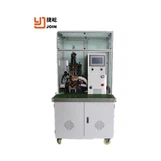
As a provider of motor welding machines, I've witnessed firsthand the importance of cost - effectiveness in the manufacturing and industrial sectors. In this blog, I'll delve into what cost - effectiveness means for motor welding machines and how it impacts businesses.
Understanding Cost - Effectiveness
Cost - effectiveness is not just about getting the lowest price. It's a balance between the cost of a product or service and the benefits it delivers. For motor welding machines, this means considering factors such as initial purchase price, operating costs, maintenance requirements, and productivity gains.
Initial Purchase Price
The initial cost of a motor welding machine can vary widely depending on its type, features, and brand. For example, a basic Rotor Resistance Welding Machine might have a lower upfront cost compared to a more advanced Stator Laser Welding Machine. However, it's important to look beyond the sticker price. A more expensive machine might offer better precision, higher productivity, and longer lifespan, which can lead to greater cost savings in the long run.
Operating Costs
Operating costs include electricity consumption, consumables (such as welding electrodes and shielding gas), and labor. Some welding machines are more energy - efficient than others. For instance, laser welding machines generally consume less energy compared to arc welding machines. Additionally, the type of consumables used can also affect operating costs. A machine that uses less expensive or more readily available consumables will be more cost - effective in the long term.


Maintenance Requirements
Regular maintenance is essential to keep a motor welding machine in good working condition. Machines with simpler designs and fewer moving parts usually require less maintenance. For example, a Stator Arc Welding Machine may have relatively straightforward maintenance procedures compared to a more complex laser welding machine. However, a well - maintained machine will have a longer lifespan and fewer breakdowns, reducing overall costs.
Productivity Gains
One of the most significant factors in cost - effectiveness is the productivity that a motor welding machine can deliver. A high - speed welding machine can complete more welds in less time, increasing output and potentially reducing labor costs. For example, a laser welding machine can achieve very high welding speeds with high precision, which is ideal for large - scale production. This increased productivity can offset the higher initial cost of the machine.
Analyzing the Cost - Effectiveness of Different Motor Welding Machines
Rotor Resistance Welding Machine
Rotor resistance welding machines are commonly used in the motor manufacturing industry. They work by applying pressure and an electric current to the workpieces, generating heat through resistance. The initial cost of a rotor resistance welding machine is relatively moderate. It has lower energy consumption compared to some other welding methods, as it only requires a short burst of electricity. The maintenance requirements are also relatively simple, mainly involving the replacement of electrodes.
However, the productivity of a rotor resistance welding machine may be limited compared to more advanced welding technologies. It may not be suitable for very high - precision or complex welding tasks. But for applications where high - volume, simple welding is required, it can be a very cost - effective option.
Stator Laser Welding Machine
Stator laser welding machines offer high precision and speed. They can weld very thin materials and create high - quality welds with minimal distortion. The initial cost of a stator laser welding machine is relatively high due to the advanced technology involved. However, the operating costs can be relatively low in the long run, as laser welding is very energy - efficient and requires fewer consumables.
The productivity gains of a stator laser welding machine are significant. It can complete welds much faster than traditional welding methods, especially for complex shapes and small components. This makes it a cost - effective choice for high - end motor manufacturing where precision and speed are crucial.
Stator Arc Welding Machine
Stator arc welding machines are widely used in the motor industry. They are relatively inexpensive to purchase and are suitable for a wide range of welding tasks. The operating costs of an arc welding machine mainly include the cost of electrodes and shielding gas. The maintenance requirements are also relatively straightforward.
However, arc welding is generally slower than laser welding and may produce more heat, which can lead to distortion in the workpieces. For applications where high - precision and high - speed welding are not critical, a stator arc welding machine can be a cost - effective option.
Case Studies: Real - World Cost - Effectiveness
Let's look at a couple of case studies to illustrate the cost - effectiveness of motor welding machines.
Case Study 1: A Small - Scale Motor Manufacturer
A small - scale motor manufacturer was using a stator arc welding machine for their production. They were facing issues with productivity and weld quality. After evaluating their options, they decided to invest in a stator laser welding machine. Although the initial cost was high, they found that the laser welding machine increased their productivity by 50% due to its high - speed welding capabilities. The improved weld quality also reduced the number of defective products, saving on rework costs. In addition, the energy - efficiency of the laser welding machine led to lower operating costs over time.
Case Study 2: A Large - Scale Motor Production Facility
A large - scale motor production facility was using multiple rotor resistance welding machines for their high - volume production. They found that the machines were reliable and had relatively low operating costs. However, they were considering upgrading to a more advanced technology to further increase productivity. After analyzing the costs and benefits, they decided to introduce a stator laser welding machine for some of their high - precision welding tasks. The combination of the rotor resistance welding machines for high - volume production and the stator laser welding machine for high - precision tasks proved to be a very cost - effective solution.
How to Choose the Most Cost - Effective Motor Welding Machine
When choosing a motor welding machine, it's important to consider your specific needs and budget. Here are some steps to help you make the right decision:
- Define Your Requirements: Determine the type of welding tasks you need to perform, the materials you'll be working with, and the desired productivity level.
- Research Different Machines: Look into the features, performance, and cost of different motor welding machines. Consider factors such as initial purchase price, operating costs, and maintenance requirements.
- Request Quotes and Trials: Get quotes from different suppliers and, if possible, request a trial of the machines. This will allow you to evaluate the machines in your own working environment.
- Consider Long - Term Costs: Don't just focus on the initial purchase price. Consider the long - term operating costs, maintenance requirements, and potential productivity gains.
Conclusion
Cost - effectiveness is a crucial factor when choosing a motor welding machine. By considering the initial purchase price, operating costs, maintenance requirements, and productivity gains, you can make an informed decision that will benefit your business in the long run. Whether you choose a rotor resistance welding machine, a stator laser welding machine, or a stator arc welding machine, each has its own advantages and can be a cost - effective option depending on your specific needs.
If you're interested in learning more about our motor welding machines or discussing your specific requirements, we're here to help. Contact us to start a conversation about how our machines can meet your production needs and provide cost - effective solutions for your business.
References
- Welding Handbook, American Welding Society
- Industrial Welding Technology, McGraw - Hill Education
- Motor Manufacturing Processes, Institute of Electrical and Electronics Engineers (IEEE)