

In the realm of industrial machinery, the integration of various components to enhance efficiency and precision is a continuous pursuit. One such question that often arises in the winding machine industry is whether a winding machine tensioner can be integrated with a programmable logic controller (PLC). As a supplier of winding machine tensioners, I am well - versed in this topic and will delve into its feasibility, benefits, and implementation processes.
Understanding Winding Machine Tensioners
Before discussing the integration with a PLC, it is essential to understand the different types of winding machine tensioners. There are primarily three types: Mechanical Tensioner, Magnetic Tensioner, and Servo Tensioner.
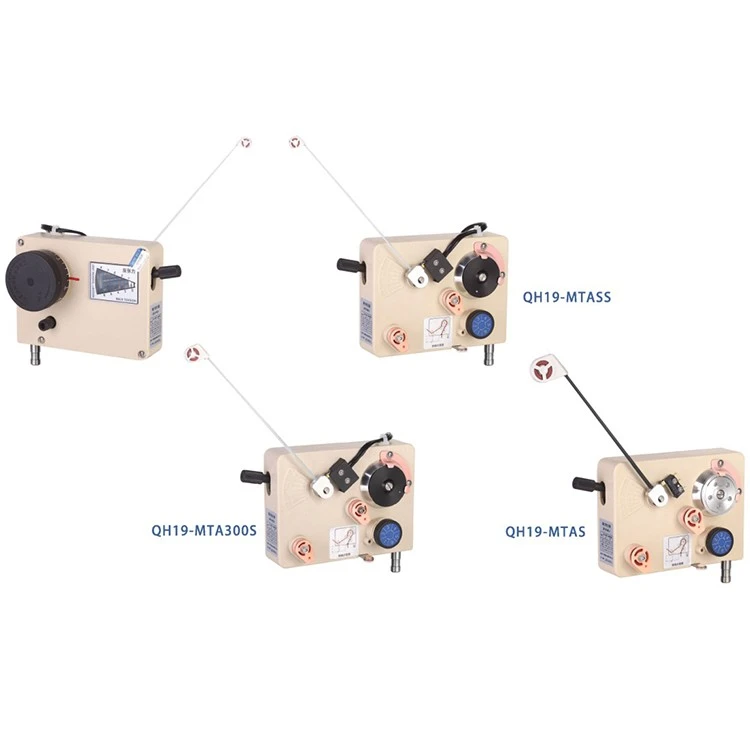
Mechanical tensioners are the most basic type. They use mechanical components such as springs, brakes, and clutches to control the tension of the winding material. These tensioners are simple in design, cost - effective, and reliable for applications where the tension requirements are relatively stable.
Magnetic tensioners, on the other hand, utilize magnetic fields to regulate the tension. They offer more precise control compared to mechanical tensioners and can adjust the tension more quickly. Magnetic tensioners are suitable for applications where the winding speed and tension need to be adjusted frequently.
Servo tensioners are the most advanced type. They use servo motors to control the tension with high precision. Servo tensioners can respond to changes in the winding process in real - time and are ideal for applications that require extremely accurate tension control, such as in the production of high - quality electronic components.
The Role of Programmable Logic Controllers (PLCs)
PLCs are industrial computers designed to automate various processes in manufacturing and industrial applications. They are highly reliable, flexible, and can be easily programmed to perform a wide range of tasks. PLCs can monitor input signals from sensors, make decisions based on pre - programmed logic, and control output devices such as motors, valves, and relays.
In the context of winding machines, a PLC can be used to control the speed of the winding motor, the tension of the material, and the overall operation of the winding process. By integrating a tensioner with a PLC, it becomes possible to achieve more precise and efficient control of the winding process.
Feasibility of Integrating a Winding Machine Tensioner with a PLC
The integration of a winding machine tensioner with a PLC is indeed feasible. In fact, it is becoming increasingly common in modern industrial settings. The key to successful integration lies in ensuring that the tensioner and the PLC are compatible in terms of communication protocols, electrical interfaces, and control requirements.
Most modern tensioners, especially servo tensioners, are designed to be easily integrated with PLCs. They are equipped with communication interfaces such as Ethernet, Modbus, or Profibus, which allow them to communicate with the PLC. These interfaces enable the PLC to send control signals to the tensioner and receive feedback signals from it, such as the actual tension value and the status of the tensioner.
For mechanical and magnetic tensioners, additional signal conditioning and conversion devices may be required to interface them with the PLC. For example, a load cell can be used to measure the tension of the material, and the output signal of the load cell can be converted into a format that the PLC can understand.
Benefits of Integrating a Winding Machine Tensioner with a PLC
1. Precise Tension Control
One of the primary benefits of integrating a tensioner with a PLC is the ability to achieve more precise tension control. The PLC can continuously monitor the tension of the material using sensors and adjust the tensioner accordingly. This ensures that the tension remains within the desired range throughout the winding process, resulting in higher - quality products.
2. Improved Efficiency
By integrating the tensioner with a PLC, the winding process can be optimized for maximum efficiency. The PLC can adjust the tension and speed of the winding motor based on the characteristics of the material and the requirements of the winding process. This reduces the time required for setup and adjustment, increases the production speed, and reduces waste.
3. Flexibility and Adaptability
A PLC - integrated tensioner system offers greater flexibility and adaptability. The PLC can be easily reprogrammed to change the tension control parameters for different winding jobs. This allows the winding machine to be used for a variety of products without the need for extensive mechanical modifications.
4. Real - Time Monitoring and Diagnosis
The integration of a tensioner with a PLC enables real - time monitoring of the winding process. The PLC can display the tension values, winding speed, and other important parameters on a human - machine interface (HMI). In case of any abnormalities or faults, the PLC can trigger alarms and take appropriate actions, such as stopping the winding process to prevent damage to the equipment or the winding material.
Implementation Process
The implementation of the integration of a winding machine tensioner with a PLC involves several steps:
1. System Analysis
The first step is to analyze the requirements of the winding process, including the type of winding material, the desired tension range, the winding speed, and the overall production volume. Based on this analysis, the appropriate type of tensioner and PLC can be selected.
2. Selection of Components
Once the requirements are defined, the next step is to select the tensioner and the PLC. The tensioner should be compatible with the winding machine and the PLC in terms of communication protocols and electrical interfaces. The PLC should have sufficient input and output channels to connect to the tensioner and other components of the winding machine.
3. Wiring and Installation
After the components are selected, they need to be installed and wired correctly. The tensioner should be connected to the PLC using the appropriate cables and connectors. The sensors, such as load cells and speed sensors, should also be installed and connected to the PLC to provide the necessary input signals.
4. Programming
The PLC needs to be programmed to control the tensioner and the winding process. The programming should include the logic for monitoring the input signals, making decisions based on the pre - programmed rules, and controlling the output devices. The programming can be done using ladder logic, function block diagrams, or other programming languages supported by the PLC.
5. Testing and Commissioning
Once the programming is completed, the system needs to be tested and commissioned. The tensioner should be tested to ensure that it can control the tension accurately. The PLC should be tested to verify that it can receive the input signals correctly, make the right decisions, and control the output devices as expected. Any issues or problems identified during the testing phase should be resolved before the system is put into production.

Contact for Procurement and Consultation
If you are interested in integrating a winding machine tensioner with a PLC for your specific application, or if you have any questions regarding our winding machine tensioners, we are here to help. Our team of experts can provide you with detailed information, technical support, and customized solutions to meet your requirements. We invite you to contact us to start a fruitful discussion about your procurement needs.
References
- "Industrial Automation Handbook" by Peter Welborn
- "PLC Programming for Dummies" by Andrew Hughes
- Technical manuals of various winding machine tensioner manufacturers
- Research papers on the integration of tensioners and PLCs in industrial applications


