

In today's highly competitive manufacturing landscape, the pursuit of enhanced production efficiency stands as a paramount goal for businesses across various industries. One technology that has emerged as a game - changer in this regard is the Servo Assembly Machine. As a supplier of Servo Assembly Machines, I am excited to delve into the question: Can a Servo Assembly Machine improve production efficiency?
Understanding Servo Assembly Machines
Servo Assembly Machines are sophisticated pieces of equipment designed to automate the assembly process of various components. They utilize servo motors, which offer precise control over motion, speed, and torque. This precision allows for highly accurate and repeatable assembly operations.
The core of a Servo Assembly Machine lies in its ability to perform tasks with extreme accuracy. For example, in the assembly of small electronic components, the slightest misalignment can lead to product failure. Servo motors can position parts with tolerances as small as a few micrometers, ensuring that each assembly is of the highest quality.
Key Features Contributing to Efficiency
Precision and Repeatability
One of the primary ways Servo Assembly Machines boost production efficiency is through their precision and repeatability. Once a program is set up, the machine can perform the same assembly operation over and over again with minimal variation. This consistency reduces the number of defective products, which in turn saves time and resources that would otherwise be spent on rework or scrap.
For instance, in the production of mobile phone components, a Servo Assembly Machine can accurately insert tiny screws or connectors into the right positions. The high - precision nature of the machine ensures that each phone assembled meets the strict quality standards, eliminating the need for manual inspection and adjustment of every single unit.
High - Speed Operation
Servo motors are known for their ability to operate at high speeds. A Servo Assembly Machine can complete assembly tasks much faster than manual labor or traditional assembly methods. The rapid acceleration and deceleration capabilities of servo motors allow the machine to move quickly between different assembly steps, reducing the overall cycle time.
In the automotive industry, where large volumes of components need to be assembled, a Servo Assembly Machine can significantly increase the production rate. For example, it can assemble engine parts at a much faster pace compared to human workers, enabling manufacturers to meet the high - demand requirements of the market.
Flexibility
Another advantage of Servo Assembly Machines is their flexibility. These machines can be easily reprogrammed to accommodate different assembly tasks or product designs. This means that manufacturers can quickly switch from producing one type of product to another without having to invest in new equipment.
For example, a manufacturer that produces both home appliances and consumer electronics can use the same Servo Assembly Machine for different assembly processes. By simply changing the program, the machine can adapt to the specific requirements of each product, providing a cost - effective solution for multi - product production.
Real - World Examples of Efficiency Improvement
Let's take a look at some real - world scenarios where Servo Assembly Machines have made a significant impact on production efficiency.
In the motor manufacturing industry, a company was facing challenges in assembling small motors with high precision and speed. They decided to invest in a Servo Assembly Machine. Before the implementation of the machine, the manual assembly process was slow and error - prone, resulting in a high defect rate.
After installing the Servo Assembly Machine, the production cycle time was reduced by more than 50%. The machine's high - precision assembly capabilities also led to a significant decrease in the defect rate, from 10% to less than 1%. This improvement not only increased the overall production output but also enhanced the quality of the motors, leading to higher customer satisfaction.
In the electronics industry, a manufacturer of printed circuit boards (PCBs) was struggling to keep up with the increasing demand. They introduced a Servo Assembly Machine to automate the component placement process. The machine was able to place components on the PCBs at a much faster rate than the previous manual method. As a result, the production capacity increased by 80%, allowing the company to meet the market demand and gain a competitive edge.
Comparison with Other Assembly Methods
When comparing Servo Assembly Machines with other assembly methods, such as manual assembly and traditional automated assembly, the advantages become even more apparent.
Manual assembly is labor - intensive and time - consuming. Workers are prone to fatigue, which can lead to inconsistent quality and slower production speeds. In addition, manual assembly requires a large workforce, which increases labor costs and management complexity.
Traditional automated assembly machines, on the other hand, may lack the flexibility and precision of Servo Assembly Machines. They are often designed for a specific assembly task and are difficult to reprogram for different products. Servo Assembly Machines, with their advanced servo motor technology, offer a more versatile and efficient solution.
Additional Benefits Beyond Efficiency
In addition to improving production efficiency, Servo Assembly Machines also bring other benefits to manufacturers.
Quality Assurance
As mentioned earlier, the high precision and repeatability of Servo Assembly Machines ensure consistent product quality. This reduces the number of customer complaints and returns, which can have a significant impact on a company's reputation and bottom line.
Safety
Automating the assembly process with Servo Assembly Machines can improve workplace safety. By replacing manual labor in hazardous or repetitive tasks, the risk of worker injuries is reduced. This not only protects the well - being of employees but also reduces the potential for costly workplace accidents and associated legal issues.

Cost Savings
Although the initial investment in a Servo Assembly Machine may be relatively high, the long - term cost savings are substantial. The reduction in labor costs, rework, and scrap, combined with the increase in production output, results in a significant return on investment over time.
Conclusion and Call to Action
In conclusion, a Servo Assembly Machine can undoubtedly improve production efficiency. Its precision, high - speed operation, flexibility, and other benefits make it an invaluable asset for manufacturers looking to stay competitive in today's market.
If you are a manufacturer seeking to enhance your production efficiency, reduce costs, and improve product quality, I encourage you to consider investing in a Servo Assembly Machine. As a trusted supplier of Servo Assembly Machines, we have a wide range of products to meet your specific needs. Whether you are in the electronics, automotive, or any other industry, our machines can be customized to fit your assembly requirements.
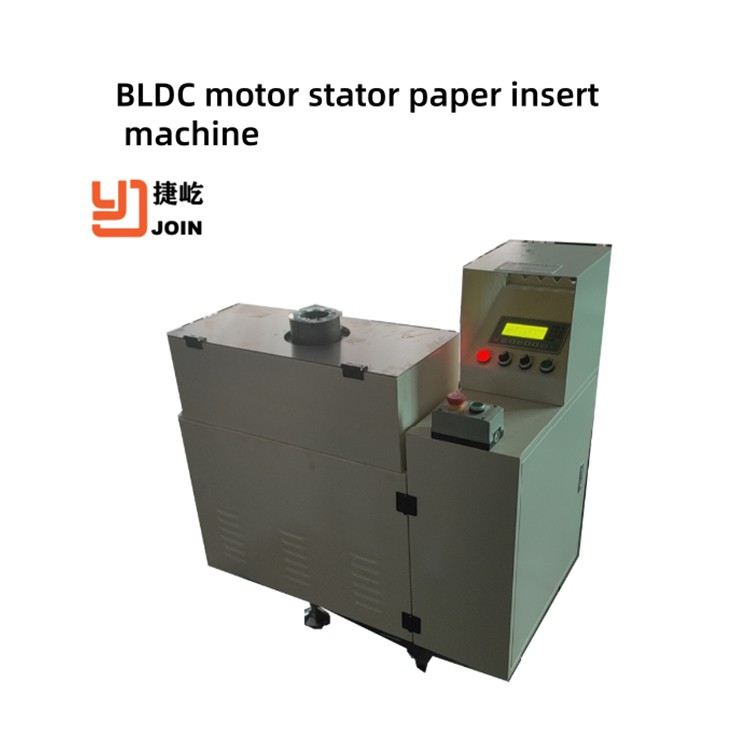
We also offer related products such as Paper Insert Machine and Rotor Magnet Insert Machine, which can further optimize your production process.
If you are interested in learning more about our Servo Assembly Machines or would like to discuss your specific requirements, please feel free to contact us for a detailed consultation. We look forward to helping you take your production to the next level.
References
- "Automation in Manufacturing: Principles and Applications" by David A. Dornfeld
- "Servo Motors and Motion Control" by William J. Palm III
- Industry reports on manufacturing efficiency and automation trends


